
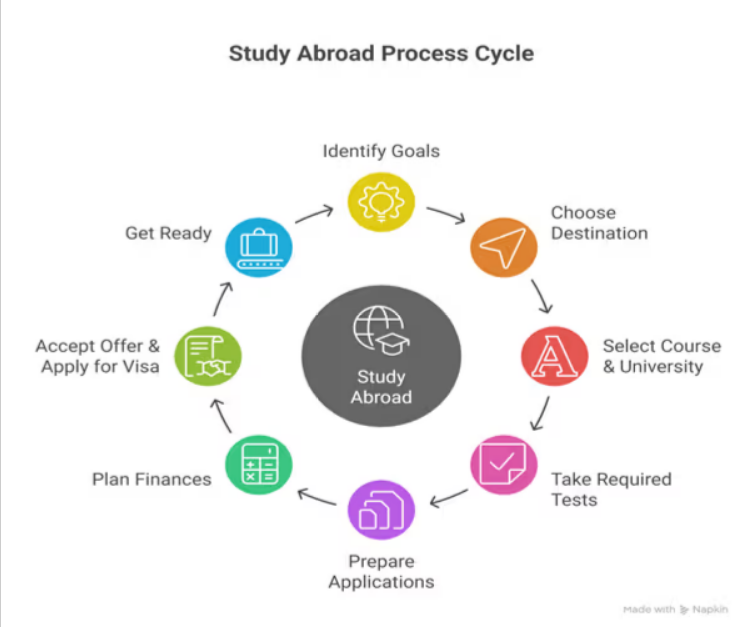
Choosing a university abroad is one of the biggest decisions students make when planning international education. With thousands of universities, courses, locations, fee structures and admission requirements to compare, it can be difficult to know where to begin. How to Choose a University Abroad is an important question for students who want to find an institution that matches their academic and career goals. A university that is highly ranked may not necessarily be the right choice for every student.
The right university should match your academic background, career plans, budget, preferred course and long-term goals. Factors such as course curriculum, university reputation, tuition fees, location, scholarships, internship opportunities and graduate outcomes should all be considered before making a final decision.
For Indian students planning to study abroad, proper research and planning can make the university selection process much more manageable. This guide explains how to choose a university abroad and the key factors you should consider before applying.
Start With Your Academic and Career Goals
Before searching for universities, be clear about what you want to study and where you want your education to take you. Your choice of university should support your career plans rather than being based only on rankings or popularity.
Consider your current qualification, subjects you enjoy, academic strengths and the type of career you want after graduation. A student planning a career in engineering will have different priorities from someone interested in business, design, healthcare or computer science.
Ask yourself:
- What course do I want to study?
- Do I want to pursue undergraduate, postgraduate or research education?
- Which subjects match my career interests?
- What type of job do I want after graduation?
- Do I want to work abroad after completing my course?
- What skills do I want to develop during my degree?
Having clear answers to these questions will make it easier to shortlist suitable universities.
Choose the Right Country First
The country you choose can affect your education experience, expenses, career opportunities and lifestyle. Instead of selecting a university first, compare countries according to your academic and personal requirements.
Indian students commonly consider destinations such as the USA, UK, Canada, Australia, New Zealand, Ireland and several European countries. Each destination has its own education system, tuition fees, visa requirements, employment rules and living costs.
When comparing countries, look at:
- Education quality and university reputation
- Tuition and living expenses
- Availability of scholarships
- Student visa requirements
- Part-time work conditions
- Post-study work opportunities
- Industry demand for your chosen field
- Safety and quality of life
- Distance from India and travel costs
The best country is not necessarily the one that is most popular. It should be the country that fits your academic plans, financial situation and future career goals.
Check the Course Curriculum Carefully
Once you have shortlisted countries, compare the actual courses offered by different universities. Two universities may offer the same degree but have completely different subjects, teaching methods and specialisations.
Read the course structure carefully and check the modules included in each year or semester. Look for practical projects, internships, laboratory work, research opportunities and industry exposure if these are important for your career.
What to Check in a University Course
A course should offer more than just a suitable degree title. Check whether the subjects match your interests and whether the programme provides the practical and academic skills required in your chosen industry. Also check the duration, assessment methods, optional subjects and available specialisations. If you already have a specific career in mind, compare the course content with the skills employers in that field generally seek.
Pay attention to:
- Core subjects
- Optional modules
- Specialisations
- Internship opportunities
- Research facilities
- Industry projects
- Placement or career support
- Course duration
- Teaching and assessment methods
Do not select a university simply because its course name sounds impressive. Read the complete curriculum before making your decision.
Compare University Rankings, But Do Not Depend Only on Them
University rankings can be useful when creating a shortlist, but they should not be the only deciding factor. A university with a lower overall ranking may have a particularly strong department for your chosen subject.
For example, if you want to study business, compare the university’s business school, faculty, course structure and graduate outcomes rather than looking only at its overall position in a ranking table.
You should consider:
- Overall university reputation
- Subject-specific ranking
- Accreditation
- Faculty experience
- Research strength
- Employer reputation
- Graduate outcomes
- Industry connections
Rankings can provide a starting point, but your final decision should be based on how well the university fits your individual requirements.
Check the University’s Entry Requirements
Every university has its own admission criteria, and requirements can also differ between courses within the same institution. Checking eligibility before applying can save both time and application costs.
Review the academic qualifications, minimum grades, prerequisite subjects and English-language requirements. Some programmes may also require entrance tests, portfolios, interviews, work experience or other supporting documents.
Before adding a university to your shortlist, check:
- Academic eligibility
- Minimum percentage or GPA
- Required subjects
- English-language test requirements
- Standardised test requirements, if applicable
- Work experience requirements
- Portfolio requirements
- Application deadlines
- Additional course-specific conditions
Mindmine Global also highlights the importance of understanding university intakes, deadlines and academic requirements as part of the overseas education process.
Calculate the Total Cost of Studying Abroad
Tuition fees are only one part of the cost of studying abroad. Students also need to account for accommodation, food, transportation, health insurance, study materials, visa expenses and personal spending.
Before selecting a university, prepare an estimated budget for the entire duration of the course.
Expenses You Should Include
A realistic study abroad budget should cover both university expenses and everyday living costs. The amount can vary considerably depending on the country, city, university and lifestyle. A university with lower tuition fees may still be expensive if it is located in a city with high accommodation and living costs. Calculate the complete cost before accepting an offer.
Consider:
- Tuition fees
- Accommodation
- Food and groceries
- Local transportation
- Health insurance
- Student visa fees
- Flight tickets
- Books and study materials
- Mobile and internet expenses
- Personal expenses
- Emergency funds
Creating a complete budget will help you avoid financial pressure after reaching your destination.
Look for Scholarships and Financial Support
Studying abroad can require a significant financial investment, but students may have access to scholarships, grants, fee reductions and other forms of financial support.
Check the university’s official website for scholarships available to international students. Some awards are based on academic performance, while others may consider leadership, extracurricular achievements, financial circumstances or specific fields of study.
When checking scholarships, find out:
- Eligibility criteria
- Scholarship amount
- Application deadline
- Documents required
- Whether the scholarship covers tuition or living costs
- Whether it is renewable
- Whether a separate application is required
Do not wait until after receiving an admission offer to look for scholarships. Some scholarship deadlines may be earlier than the main university application deadline.
Consider the University Location
The city where your university is located can have a major impact on your overall study abroad experience. Location affects accommodation costs, transportation, lifestyle, part-time work opportunities and access to industries.
A university located in a major business or technology hub may offer stronger connections to certain industries. However, large cities can also have significantly higher living costs.
Think about:
- City size and lifestyle
- Cost of accommodation
- Public transportation
- Safety
- Weather
- Part-time employment opportunities
- Proximity to relevant industries
- Distance from the airport
- Availability of Indian or international student communities
Choose a location where you can comfortably manage both your academic responsibilities and daily life.
Check Internship and Career Opportunities
Your university experience should prepare you for life after graduation. Therefore, career support and industry connections are important factors when choosing a university abroad.
Look at whether the university works with companies in your field and whether students have access to internships, career fairs, industry projects, networking events or placement support.
You can also research:
- Graduate employment rates
- Major recruiting companies
- Internship opportunities
- Career services
- Alumni network
- Industry partnerships
- Professional networking opportunities
- Average graduate outcomes where reliable data is available
Post-study work opportunities are also an important consideration for many Indian students. However, visa and immigration policies can change, so students should always verify current rules through official government sources.
Read Reviews and Speak to Current Students
University websites provide important information, but they do not always tell you what everyday student life is like. Speaking with current students or recent graduates can provide useful insights into academics, accommodation, campus life and career support.
Look for genuine student experiences rather than relying on a single review. You can use student communities, alumni networks, university events and professional platforms to connect with people who have studied the course you are considering.
Ask students about:
- Teaching quality
- Faculty accessibility
- Workload
- Accommodation
- Campus facilities
- Student support
- Internship opportunities
- Career services
- Overall student experience
Personal experiences should support your research rather than replace official university information.
Create a Balanced University Shortlist
Once you have compared your options, create a balanced shortlist rather than applying randomly to a large number of universities.
A practical shortlist can include universities where admission is highly competitive, universities where your profile is a strong match and options where you have a more realistic chance of receiving an offer.
A Simple Shortlisting Method
Create a spreadsheet and compare every university using the same factors. Give each university a score for academics, course quality, cost, location, scholarships, career opportunities and admission suitability. This makes the comparison more objective and can help you identify universities that offer the best overall fit rather than simply the highest ranking.
Your shortlist can include:
- Ambitious options: Highly competitive universities where admission may be difficult.
- Target options: Universities where your academic profile matches the requirements well.
- Safe options: Universities where you have a stronger likelihood of meeting the admission criteria.
This approach can reduce the risk of relying entirely on one or two universities.
Verify Information Before Applying
Study abroad requirements can change. Tuition fees, deadlines, English-language requirements, scholarship conditions and visa policies may be updated from time to time.
Always verify important information through official university and government websites before submitting an application or making financial commitments.
Avoid making decisions based only on:
- Old YouTube videos
- Social media posts
- Unverified rankings
- Advice from friends with different academic profiles
- Outdated university information
- Guaranteed admission claims
Reliable information is especially important when dealing with applications, finances and visas.
Common Mistakes to Avoid When Choosing a University Abroad
Students can sometimes make their university selection more complicated by focusing on the wrong factors. Avoid choosing a university only because it is famous, because someone you know is studying there, or because an agent recommends it.
Some common mistakes include:
- Choosing rankings over course quality
- Ignoring the total cost of education
- Applying without checking eligibility
- Missing application or scholarship deadlines
- Selecting a course without reading the curriculum
- Ignoring the location and cost of living
- Depending entirely on post-study work claims
- Applying to only highly competitive universities
- Using outdated information
- Making decisions without considering long-term career goals
A university decision should be based on your own profile and priorities.
How Mindmine Global Can Help You Choose a University Abroad
Choosing a university can become easier with proper counselling and profile-based guidance. Mindmine Global provides support for students planning to study abroad, including career and course counselling, country and university selection, application guidance, English-language test preparation, scholarship assistance, visa support and pre-departure counselling.
Professional guidance can help students compare universities according to their academic background, budget, preferred destination and career plans rather than following a one-size-fits-all approach.
For Indian students, the right university is not necessarily the university with the highest ranking. It is the institution that offers the right course, fits the budget, matches the student’s academic profile and provides a realistic path towards future career goals.
Final Checklist Before Choosing a University Abroad
Before submitting your application, make sure you have reviewed the following:
- Course curriculum and specialisations
- University reputation and accreditation
- Entry requirements
- Tuition fees
- Living expenses
- Scholarships
- Application deadlines
- Location and accommodation
- Internship opportunities
- Career support
- Graduate outcomes
- Student reviews
- Visa requirements
- Post-study work rules
Choosing a university abroad requires time, research and careful comparison. Instead of asking which university is simply the “best,” focus on which university is best suited to your profile, goals and budget. A well-planned decision at this stage can make the rest of your study abroad journey much more organised and manageable.
Read Also This Blog
Financial Proof for Student Visa: Documents, Funds & Requirements