
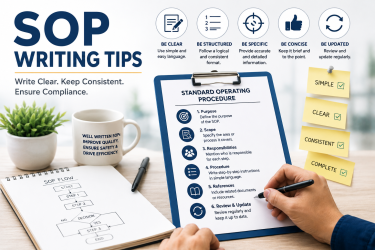
Every successful organization depends on well-defined processes. Whether it is onboarding a new employee, managing customer requests, handling internal operations, or maintaining quality standards, businesses need clear instructions to ensure work is completed correctly every time. This is where Standard Operating Procedures (SOPs) become essential. Understanding SOP Writing Tips helps organizations create clear, consistent, and practical procedures that improve efficiency and support long-term business success.
A well-written SOP acts as a practical guide that explains how a specific task or process should be performed. It reduces confusion, improves consistency, and helps employees follow the right steps without depending completely on individual experience or assumptions.
However, writing an effective SOP requires more than simply documenting steps. A good SOP should be clear, easy to understand, relevant to the users, and regularly updated according to business requirements.
In this article, we will discuss important SOP writing tips, common mistakes to avoid, and best practices for creating professional SOP documents that support business growth and operational efficiency.
What is an SOP (Standard Operating Procedure)?
A Standard Operating Procedure (SOP) is a documented set of instructions that explains how to perform a particular task or process within an organization. It provides employees with a standard method to complete activities while maintaining quality and consistency.
SOPs are used across different industries, including healthcare, finance, manufacturing, technology, education, hospitality, and professional services. They can cover simple daily tasks as well as complex operational procedures.
Examples of SOPs include:
- Employee onboarding procedures
- Customer support handling processes
- Quality control procedures
- Data management guidelines
- Sales processes
- Workplace safety instructions
- Compliance procedures
The main purpose of an SOP is to create a reliable system where employees understand their responsibilities and follow approved methods for completing tasks.
Why Are Well-Written SOPs Important for Businesses?
A properly written SOP provides several benefits for organizations. It helps businesses maintain operational standards while reducing dependency on individual knowledge.
- Maintains Consistency: When employees follow the same documented process, businesses can maintain consistent results. SOPs ensure that tasks are completed according to predefined standards regardless of who performs them.
- Reduces Errors and Miscommunication: Unclear processes often lead to mistakes, delays, and misunderstandings. SOPs provide clear instructions that help employees complete tasks accurately.
- Supports Employee Training: New employees need proper guidance when joining an organization. SOP documents make training easier by providing structured information about roles, responsibilities, and workflows.
- Improves Productivity: Employees spend less time searching for information or asking repeated questions when procedures are properly documented. This allows teams to focus on completing tasks efficiently.
- Helps With Compliance Requirements: Many industries require businesses to maintain proper documentation for audits, regulations, and quality standards. SOPs help organizations demonstrate that processes are properly managed.
Key Elements of an Effective SOP
A professional SOP should include important sections that make the document complete and easy to follow.
1. SOP Title
The title should clearly describe the process. A reader should immediately understand what the document covers.
Example:
- Incorrect: “Customer Process”
- Better: “Customer Complaint Handling Procedure”
2. Purpose of the SOP
The purpose section explains why the SOP exists and what objective it supports.
For example:
“The purpose of this SOP is to define the standard process for handling customer complaints and ensuring timely resolution.”
3. Scope of the Procedure
The scope explains where and when the SOP applies. It helps users understand which activities, departments, or situations are covered.
4. Roles and Responsibilities
Clearly mention who is responsible for each activity. This prevents confusion and ensures accountability.
Example:
- Customer Support Executive: Receives and records complaints
- Team Leader: Reviews unresolved issues
- Quality Team: Conducts performance checks
5. Step-by-Step Instructions
This is the main section of an SOP. Instructions should be written in a logical order with clear actions.
Instead of:
“Handle customer requests properly.”
Write:
- Step 1: Verify customer details in the CRM system.
- Step 2: Review the customer request.
- Step 3: Provide the appropriate solution within the defined response timeline.
6. Required Tools and Resources
Mention any software, documents, systems, or equipment required to complete the process.
7. Review and Approval Information
Every SOP should include details such as:
- Document owner
- Version number
- Date of creation
- Last review date
- Approval authority
This helps maintain proper document management.
Practical SOP Writing Tips for Businesses
1. Understand the Process Before Writing
One of the biggest mistakes organizations make is creating SOPs without properly understanding the actual workflow.
Before writing, gather information from employees who perform the task regularly. Discuss:
- Current process steps
- Common challenges
- Required resources
- Possible exceptions
- Expected results
A writer should understand the complete process before documenting it.
2. Define the Objective Clearly
Every SOP should have a clear purpose. Readers should know why the procedure exists and what outcome they should achieve.
A strong objective keeps the document focused and prevents unnecessary information from being added.
3. Use Simple and Clear Language
An SOP should be easy for every relevant employee to understand. Avoid complicated terminology, long sentences, or unclear instructions.
Use:
- Short sentences
- Direct instructions
- Action words
- Simple explanations
For example:
Instead of:
“Appropriate verification activities should be initiated by concerned personnel.”
Write:
“The assigned employee must verify customer information before processing the request.”
4. Organize Information Properly
A good structure improves readability. Use headings, numbered steps, bullet points, and sections to make information easier to find.
Employees should not struggle to understand the document or search for important details.
5. Add Visual Support When Required
Some processes are easier to understand through visuals.
Useful elements include:
- Process flowcharts
- Screenshots
- Diagrams
- Checklists
- Tables
Visual information can make complex procedures easier to follow.
6. Keep the User’s Perspective in Mind
An SOP is created for users, not just for documentation purposes.
While writing, consider:
- What questions will employees have?
- Where might they make mistakes?
- What information do they need before starting the task?
A user-focused SOP becomes more practical and effective.
7. Test the SOP Before Implementation
Before final approval, test the SOP with employees who will use it.
Ask them:
- Are the instructions clear?
- Are any steps missing?
- Is additional information required?
- Can the process be completed using this document?
Feedback helps improve the quality of the SOP.
Common Mistakes to Avoid While Writing SOPs
1. Writing Unclear Instructions
Avoid general statements that do not explain specific actions.
- Poor SOP: Complete the process carefully.
- Better SOP: Review all submitted documents and confirm approval status before moving to the next step.
2. Adding Too Much Unnecessary Information
An SOP should provide useful information, not become a lengthy explanation of unrelated topics. Keep the content focused on the actual process.
3. Not Updating SOP Documents
Business processes change over time. Outdated SOPs can create confusion and reduce efficiency. Regular reviews ensure documents remain accurate.
4. Ignoring Employee Feedback
Employees who perform processes daily often identify problems that are not visible during documentation. Their feedback should be considered when improving SOPs.
5. Poor Document Organization
A difficult-to-read SOP reduces adoption. Proper formatting, headings, and navigation improve usability.
How Professional SOP Writing Services Help Businesses
Creating high-quality SOPs requires time, process understanding, and documentation expertise. Professional SOP writing services help businesses create structured documents that match their operational requirements.
Benefits include:
- Expert documentation support
- Better process standardization
- Improved employee training
- Reduced operational confusion
- Stronger process management
Organizations can save internal resources while ensuring their procedures are professionally documented.
Best Practices for Managing SOP Documents
Creating an SOP is only the first step. Proper management is equally important.
- Regular Reviews: Review SOPs periodically to ensure they match current business practices.
- Version Control: Maintain proper records of updates, changes, and approvals.
- Employee Training: Ensure employees understand how to use SOP documents effectively.
- Easy Accessibility: Store SOPs in locations where employees can easily access them when required.
- Continuous Improvement: Use feedback and performance data to improve existing procedures.
How MindMine Global Supports Businesses with SOP Documentation
Professional documentation plays an important role in improving business operations. MindMine Global helps organizations create structured and practical documentation solutions that support better process management.
With a focus on clarity, accuracy, and business requirements, professional SOP documentation helps companies establish reliable workflows and improve operational performance.
Whether a business needs new SOP development, process documentation, or improvement of existing procedures, expert support can help create documents that are easier for teams to follow and maintain.
FAQs About SOP Writing Tips
Q1. What is an SOP and why is it important?
An SOP (Standard Operating Procedure) is a documented guide that explains how to complete a specific task or process. It helps businesses maintain consistency, reduce errors, and improve employee efficiency.
Q2. How do you write an effective SOP?
To write an effective SOP, understand the process, define the purpose, organize steps clearly, use simple language, include responsibilities, and review the document before implementation.
Q3. What should be included in an SOP document?
A good SOP should include the title, purpose, scope, responsibilities, step-by-step instructions, required resources, and document control details.
Q4. How long should an SOP be?
The length of an SOP depends on the complexity of the process. It should include all necessary information without adding unnecessary details.
Q5. Who should write an SOP in an organization?
SOPs can be written by process owners, managers, documentation specialists, or professional SOP writing service providers. Input from employees who perform the task is also valuable.
Q6. How often should SOPs be updated?
SOPs should be reviewed regularly and updated whenever there are changes in processes, technology, regulations, or business requirements.
Q7. What are common mistakes in SOP writing?
Common mistakes include unclear instructions, outdated information, poor formatting, missing steps, and creating documents that are difficult for employees to understand.
Q8. Can SOPs improve employee productivity?
Yes. SOPs reduce confusion, provide clear guidance, and help employees complete tasks faster without repeatedly seeking assistance.
Q9. Why should businesses hire professional SOP writing services?
Professional SOP writers bring documentation expertise, structured approaches, and process understanding that help businesses create effective and practical SOP documents.
Q10. How does SOP documentation support business growth?
SOP documentation creates organized workflows, improves employee performance, supports scalability, and helps businesses maintain quality as they grow.
Conclusion
Creating effective Standard Operating Procedures is more than documenting tasks—it is about building a structured system that improves consistency, efficiency, and accountability across an organization. By following these SOP Writing Tips, businesses can develop clear, user-friendly procedures that reduce errors, simplify employee training, support compliance, and enhance overall operational performance.
As organizations evolve, SOPs should be reviewed and updated regularly to reflect changes in processes, technology, and business requirements. Well-maintained SOPs not only help teams work more efficiently but also provide a strong foundation for sustainable business growth. Whether you are creating your first SOP or improving existing documentation, investing time in writing clear and practical procedures can deliver long-term value for your organization.
Read Also This Blog