
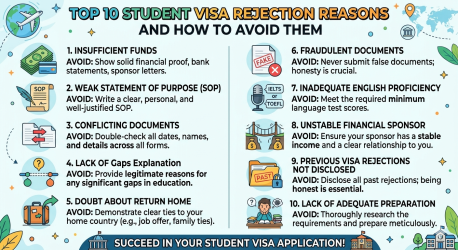
Studying abroad is one of the most significant investments students make in their academic and professional future. From accessing world-class education and international exposure to unlocking global career opportunities, the benefits of studying overseas are immense. However, receiving an admission offer from a university is only half the battle. Securing a student visa is the crucial step that ultimately determines whether your study abroad dream becomes a reality. Understanding the Top 10 Student Visa Rejection Reasons and How to Avoid Them can help students prepare stronger applications and improve their chances of visa approval.
Every year, thousands of Indian students apply for study abroad visas to countries such as Canada, Australia, the UK, the USA, New Zealand, and Ireland. While many applications are approved, a considerable number face rejection due to avoidable mistakes and insufficient preparation.
At Mind Mine Global, we have worked closely with students throughout their international education journey and understand the challenges involved in the visa process. The good news is that most student visa rejection reasons can be identified and addressed before submission.
In this guide, we explore the top 10 student visa rejection reasons and provide practical strategies to help you improve your chances of student visa approval.
Why Understanding Student Visa Rejection Reasons Matters
Visa officers evaluate every application carefully to determine whether a student is genuinely eligible to study in their country. Their assessment goes beyond academic qualifications and includes financial stability, study intentions, immigration history, and future career plans.
Understanding common visa rejection reasons helps students:
- Submit stronger applications
- Avoid costly delays and reapplications
- Improve interview performance
- Increase confidence throughout the visa process
- Maximize their chances of receiving a study abroad visa
Let’s look at the most common causes of student visa rejection and how to avoid them.
1. Incomplete or Incorrect Documentation
One of the most common student visa rejection reasons is submitting incomplete, outdated, or inaccurate documentation.
Visa officers rely heavily on documents to verify your identity, educational background, financial capacity, and study intentions. Missing documents or incorrect information can immediately create doubts about the credibility of your application.
Why Applications Get Rejected
- Missing academic transcripts
- Incorrect application forms
- Expired documents
- Incomplete financial records
- Errors in personal information
How to Avoid It
- Create a document checklist before applying.
- Verify every document before submission.
- Ensure all information matches across forms and supporting documents.
- Keep digital and physical copies of all records.
At Mind Mine Global, we conduct multiple documentation reviews to ensure nothing is overlooked.
2. Insufficient Financial Proof
Financial stability plays a major role in student visa approval decisions.
Visa officers need evidence that you can pay tuition fees, accommodation costs, living expenses, health insurance, and other study-related expenses without facing financial hardship.
Why Applications Get Rejected
- Insufficient bank balance
- Unexplained deposits
- Inconsistent financial records
- Lack of proof regarding funding sources
How to Avoid It
- Maintain sufficient funds well before applying.
- Provide clear bank statements and financial documents.
- Include education loan approvals if applicable.
- Explain sponsorship arrangements transparently.
Strong financial documentation demonstrates your preparedness and ability to complete your education successfully.
3. Lack of Genuine Intent to Study
Visa officers must be convinced that your primary purpose is education rather than immigration.
If your application appears focused on migration opportunities rather than academic goals, it can raise concerns.
Why Applications Get Rejected
- Vague study objectives
- Poor explanation of career goals
- Weak connection between previous education and chosen course
How to Avoid It
- Clearly explain your academic motivations.
- Show how the course aligns with your career plans.
- Demonstrate genuine interest in the program and institution.
A clear educational purpose significantly strengthens your international student visa application.
4. Poor Academic Profile
Academic performance is often used as an indicator of a student’s ability to succeed in an international educational environment.
A poor academic history does not automatically lead to rejection, but it may require additional explanation.
Why Applications Get Rejected
- Low grades
- Multiple backlogs
- Significant academic gaps
- Inconsistent educational history
How to Avoid It
- Provide honest explanations for academic challenges.
- Highlight improvements, certifications, and achievements.
- Showcase relevant work experience where applicable.
Many students with average academic records successfully obtain visas when their applications are properly positioned.
5. Weak Statement of Purpose (SOP) or Study Plan
Your Statement of Purpose is one of the most important components of your student visa application.
A generic or poorly written SOP often fails to convince visa officers about your intentions.
Why Applications Get Rejected
- Generic content copied from templates
- Lack of career direction
- Weak course justification
- Unclear future plans
How to Avoid It
- Write a personalized SOP.
- Explain your educational background clearly.
- Justify your choice of university, country, and program.
- Outline realistic career goals after graduation.
An effective SOP tells a compelling story about your educational journey and future ambitions.
6. Inconsistent Information Across Documents
Consistency is critical during the visa assessment process.
Even minor discrepancies can create doubts regarding the authenticity of your application.
Why Applications Get Rejected
- Different financial information in supporting documents
- Mismatched educational timelines
- Contradictory statements during interviews
How to Avoid It
- Review every application detail carefully.
- Ensure all documents tell the same story.
- Be truthful throughout the process.
Accuracy and transparency help establish trust with visa officers.
7. Low English Language Proficiency
Most international institutions and immigration authorities require students to demonstrate English language proficiency.
Strong communication skills indicate that you can succeed academically and adapt to a new environment.
Why Applications Get Rejected
- Low IELTS, TOEFL, or PTE scores
- Poor communication abilities
- Failure to meet minimum language requirements
How to Avoid It
- Prepare thoroughly for language exams.
- Retake tests if necessary.
- Improve speaking and listening skills before interviews.
Language proficiency is often viewed as an indicator of academic readiness.
8. Poor Visa Interview Performance
Countries such as the United States frequently assess applicants through visa interviews.
Even students with strong documentation can face challenges if they perform poorly during interviews.
Why Applications Get Rejected
- Nervousness and lack of confidence
- Memorized answers
- Inability to explain study plans
- Contradictory responses
How to Avoid It
Follow these important visa interview tips:
- Practice common interview questions.
- Understand your course and university thoroughly.
- Answer honestly and confidently.
- Maintain professional body language.
Mock interview preparation can significantly improve performance and confidence.
9. Previous Immigration Violations
Past immigration issues can affect future visa decisions.
Visa authorities often review an applicant’s travel and immigration history before making a decision.
Why Applications Get Rejected
- Previous visa overstays
- Deportation records
- Violation of visa conditions
- Misrepresentation in earlier applications
How to Avoid It
- Disclose previous immigration history honestly.
- Provide supporting explanations where required.
- Demonstrate compliance with immigration laws moving forward.
Attempting to hide previous issues can create greater problems than the issue itself.
10. Choosing an Unsuitable Course or Institution
Course selection is closely evaluated by visa officers.
If the chosen program appears unrelated to your educational background or career aspirations, questions may arise regarding your intentions.
Why Applications Get Rejected
- Unexplained course changes
- Irrelevant program selection
- Lack of progression in studies
How to Avoid It
- Choose programs aligned with your academic and professional goals.
- Clearly explain any changes in academic direction.
- Research your institution thoroughly.
A logical study pathway helps demonstrate genuine intent and strengthens your application.
Expert Tips to Improve Student Visa Approval Chances
Based on our extensive experience helping students study abroad, here are some proven recommendations to increase your chances of success:
- Start Early: Avoid last-minute preparation. Begin gathering documents and financial records several months before applying.
- Build a Strong Academic Profile: Maintain consistent academic performance and participate in internships, certifications, and extracurricular activities.
- Focus on Documentation Accuracy: Even small mistakes can cause delays or rejection. Review everything carefully before submission.
- Prepare Thoroughly for Interviews: Practice answering questions about your course, university, career goals, and financial plans.
- Seek Professional Guidance: Professional support can help identify weaknesses, improve documentation, strengthen your SOP, and prepare you for interviews.
At Mind Mine Global, we help students navigate every stage of the admission and visa process with personalized guidance and expert support.
Conclusion
Receiving a student visa rejection can be disappointing, but understanding the most common student visa rejection reasons can help you avoid costly mistakes and improve your chances of success.
From incomplete documentation and insufficient financial proof to weak SOPs and poor interview performance, many visa rejection reasons are entirely preventable with proper planning and preparation.
The key to a successful study abroad visa application is demonstrating that you are a genuine student with clear academic goals, sufficient financial resources, and a strong commitment to completing your education overseas.
With the right strategy, accurate documentation, and expert guidance, you can significantly improve your chances of obtaining student visa approval and beginning your international education journey with confidence.
Ready to Turn Your Study Abroad Dream Into Reality?
At Mind Mine Global, we provide end-to-end support for university admissions, course selection, SOP preparation, application assistance, documentation review, and visa guidance.
Whether you’re planning to study in Canada, Australia, the UK, the USA, Ireland, or New Zealand, our experienced counselors can help you avoid common mistakes and strengthen your application at every stage.
Connect with Mind Mine Global today and take the first step toward a successful study abroad journey with expert guidance you can trust.
Read Also This Blog